Your body makes itself, but things like living an unhealthy stress, pollution, and just getting older can lower your levels over time
We work exclusively with licensed compounding pharmacies that meet USP sterility standards and will discuss regulatory status at your consultation
Hedman, A
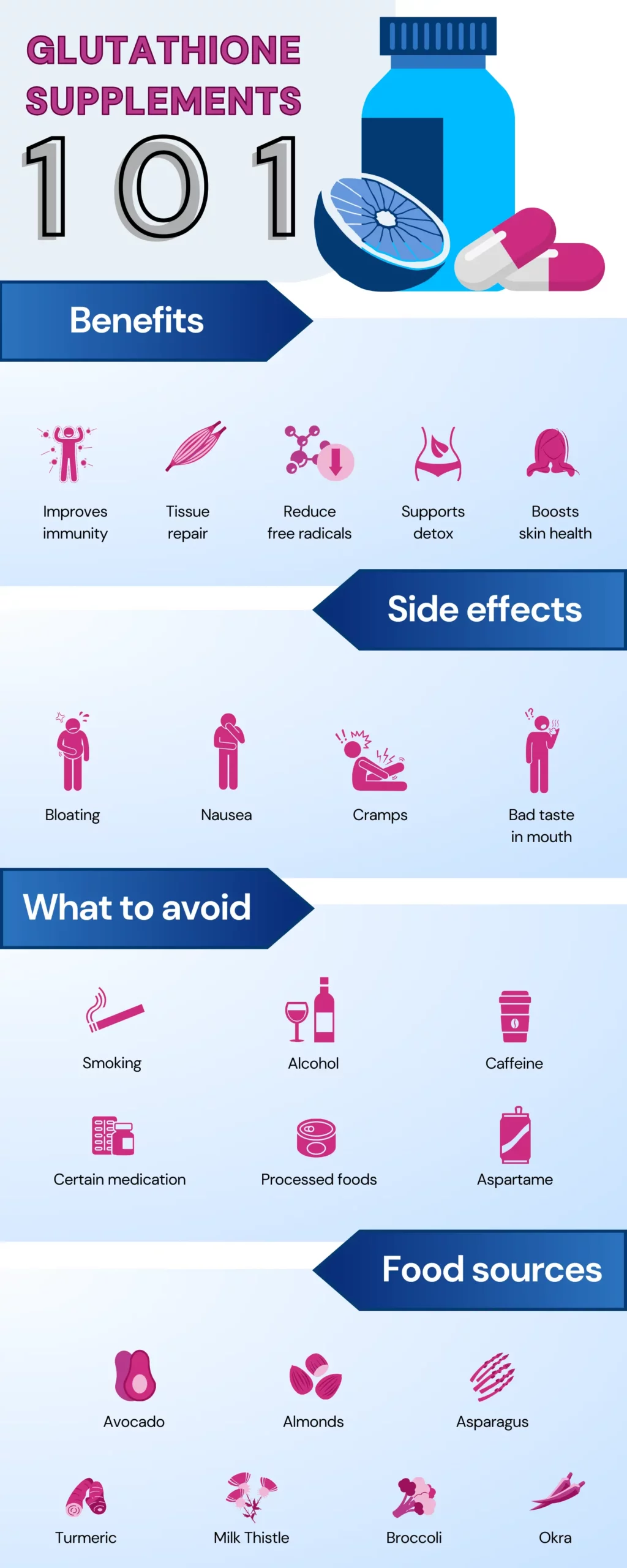
Many foods that are high in glutathione, sulfur, and other antioxidants have been linked to improved glutathione levels, such as ( 4 ): whey protein powder (high in cysteine) cruciferous vegetables (e.g., broccoli, cabbage, cauliflower, bok choy, Brussels sprouts) allium vegetables (e.g., garlic, onions, shallots) other fruits and vegetables (e.g., asparagus, avocado, cucumber, green beans, mango, papaya, spinach, and tomato) herbs and spices (e.g., curcumin from turmeric) green tea selenium-rich foods (e.g., Brazil nuts, beef, chicken, seafood, dairy products, and whole grains) vitamin C foods (e.g., bell peppers, papaya, mango, oranges, kiwi, Brussels sprouts, cabbage, cauliflower) omega-3s (e.g., fatty fish, omega-3 supplements ) While helpful, it's currently debated whether eating a diet rich in glutathione will significantly improve glutathione levels, since it's not completely absorbed through food

If the pressure in the tank gets too high, it backs up into the pipes (ureters) and eventually the source (kidneys)