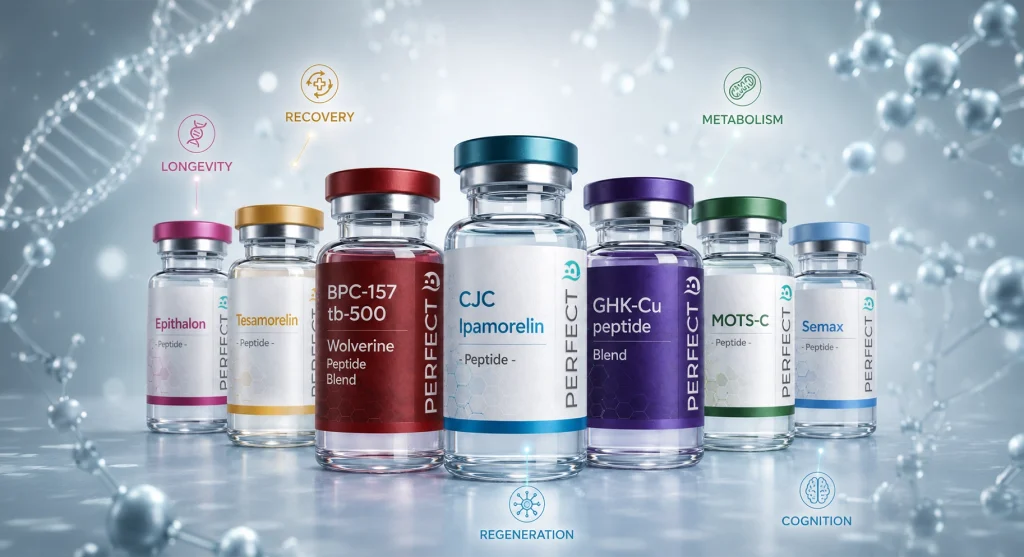
While each peptide has been studied individually for its potential influence on fat distribution, muscle tissue quality, neurological markers, and metabolic balance, their combination appears to provide a platform for exploring synergistic or complementary roles

(2000), Horm Res 53(Suppl 3), PubMed 10971106 Statistics from preclinical literature AOD-9604 = modified fragment of hGH 177191 + N-terminal Tyr (sequence Tyr-Leu-Arg-Ile-Val-Gln-Cys-Arg-Ser-Val-Glu-Gly-Ser-Cys-Gly-Phe), molecular weight 1815.1 Da Developed at Metabolic Pharmaceuticals (Australia) based on the work of professor Frank Ng (Monash University) in the 1990s Standard experimental dose in obesity clinical trials: 1 mg/day subcutaneously (Phase 2b, Heffernan et al.) Mechanism: stimulation of 3-adrenergic receptors in adipose tissue, increased lipolysis and fatty acid oxidation without activation of the hGH receptor (no IGF-1 increase) Phase 2b clinical trial (2007, 300 patients): weight reduction ~2.8 kg vs placebo over 12 weeks FDA status: NDI rejection (2014) as a dietary supplement
B12 supports hematologic and neurologic functions, and L-carnitine transports long-chain fatty acids into mitochondria
Vitamin B2 - also called Riboflavin, is essential for proper adrenal function and overall nerve health
By blocking NNMT activity, it increases critical cellular metabolites (SAM, NAD) that drive downstream increases in energy expenditure and metabolic health 1-4